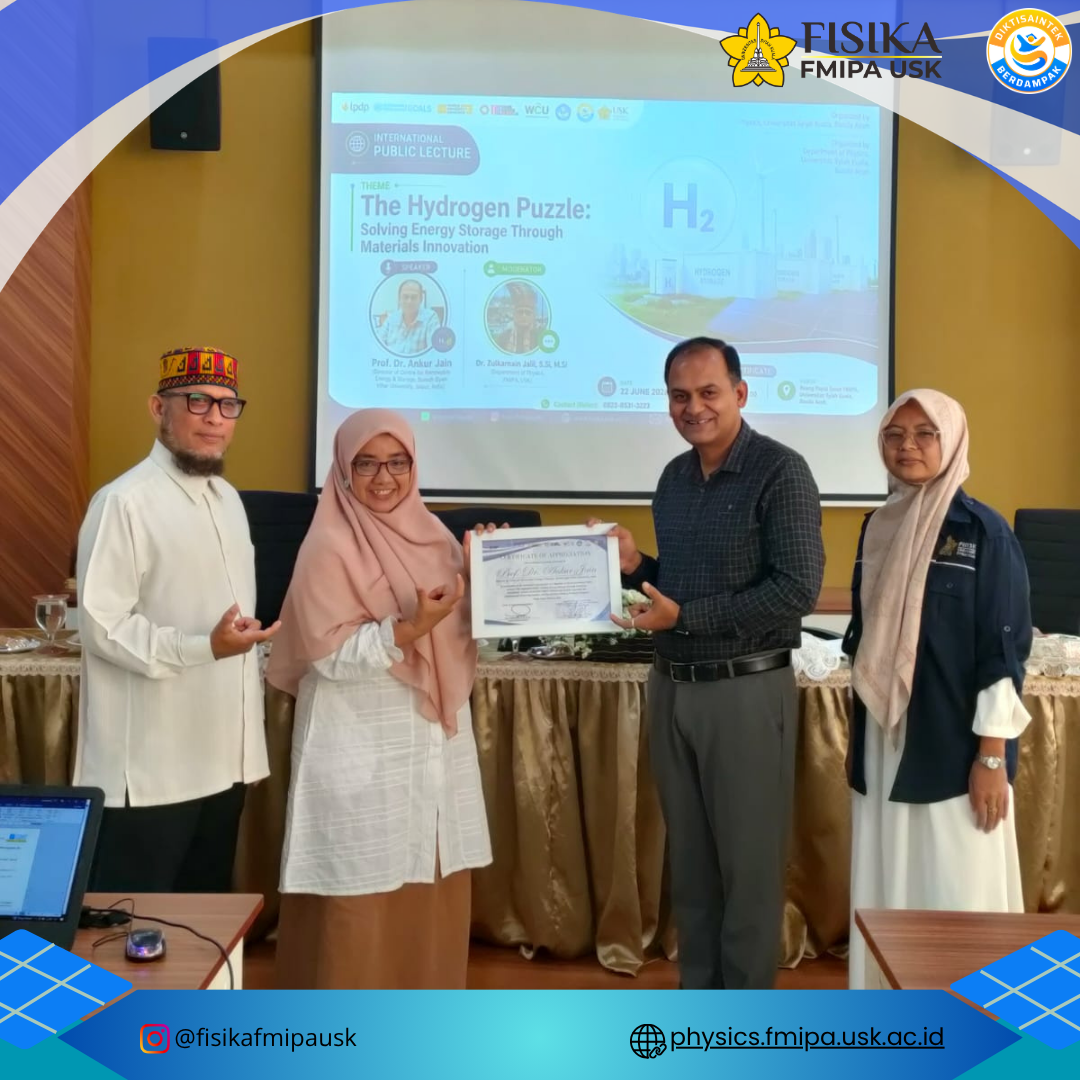
Banda Aceh – The Department of Physics, Faculty of Mathematics and Natural Sciences (FMIPA), Universitas Syiah Kuala (USK), successfully organized a series of international academic activities under the WCU Inviting Professor Program from 22-24 June 2026 at FMIPA USK, Banda Aceh. The program featured Prof. Dr. Ankur Jain, Director of the Centre for Renewable Energy & Storage, Suresh Gyan Vihar University, Jaipur, India, as the distinguished guest speaker.
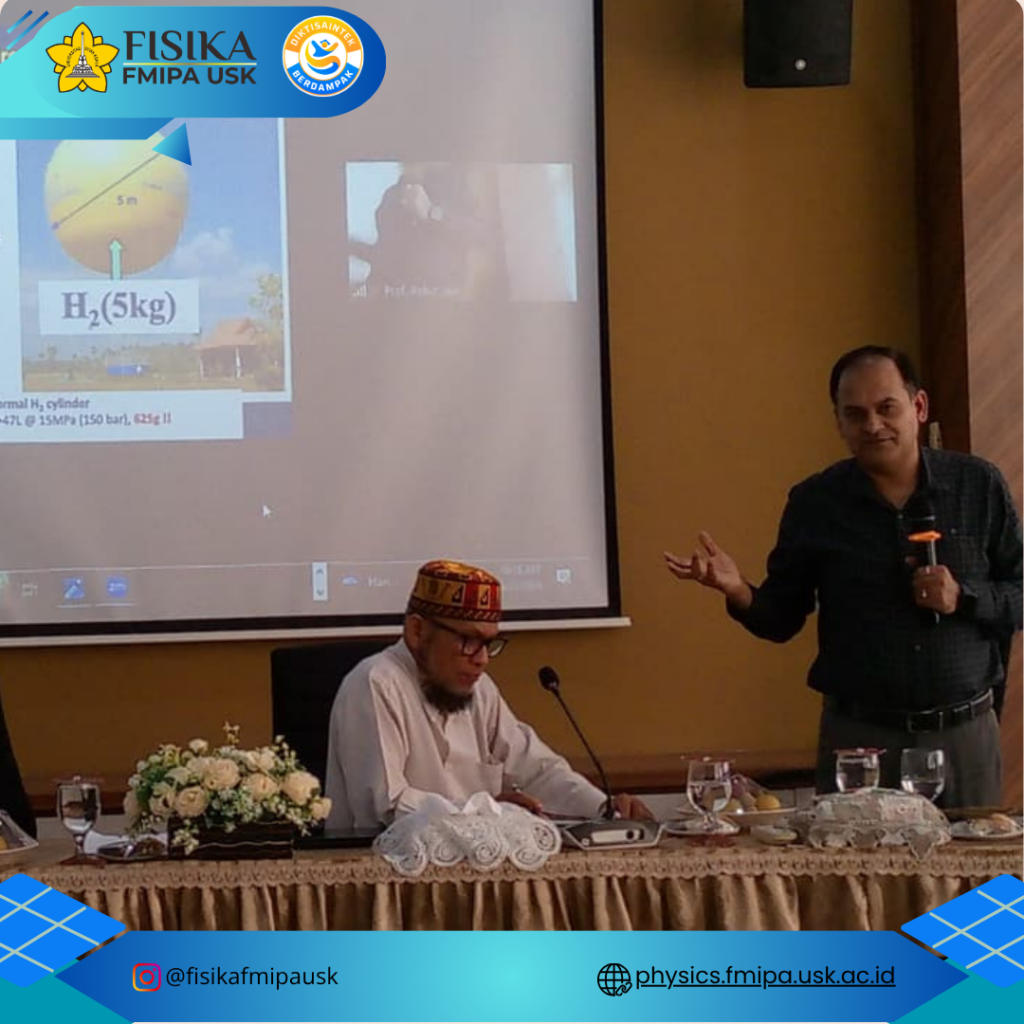
The program commenced on Monday, 22 June 2026, with an International Public Lecture held at the FMIPA Senate Meeting Room under the theme “The Hydrogen Puzzle: Solving Energy Storage Through Materials Innovation.” The lecture was attended by undergraduate and graduate students, as well as faculty members from various study programs within USK. During his presentation, Prof. Dr. Ankur Jain discussed recent advances in hydrogen-based energy storage technologies and the role of innovative materials in accelerating the global transition toward clean and sustainable energy systems. The session was moderated by Dr. Zulkarnain Jalil, S.Si., M.Si.
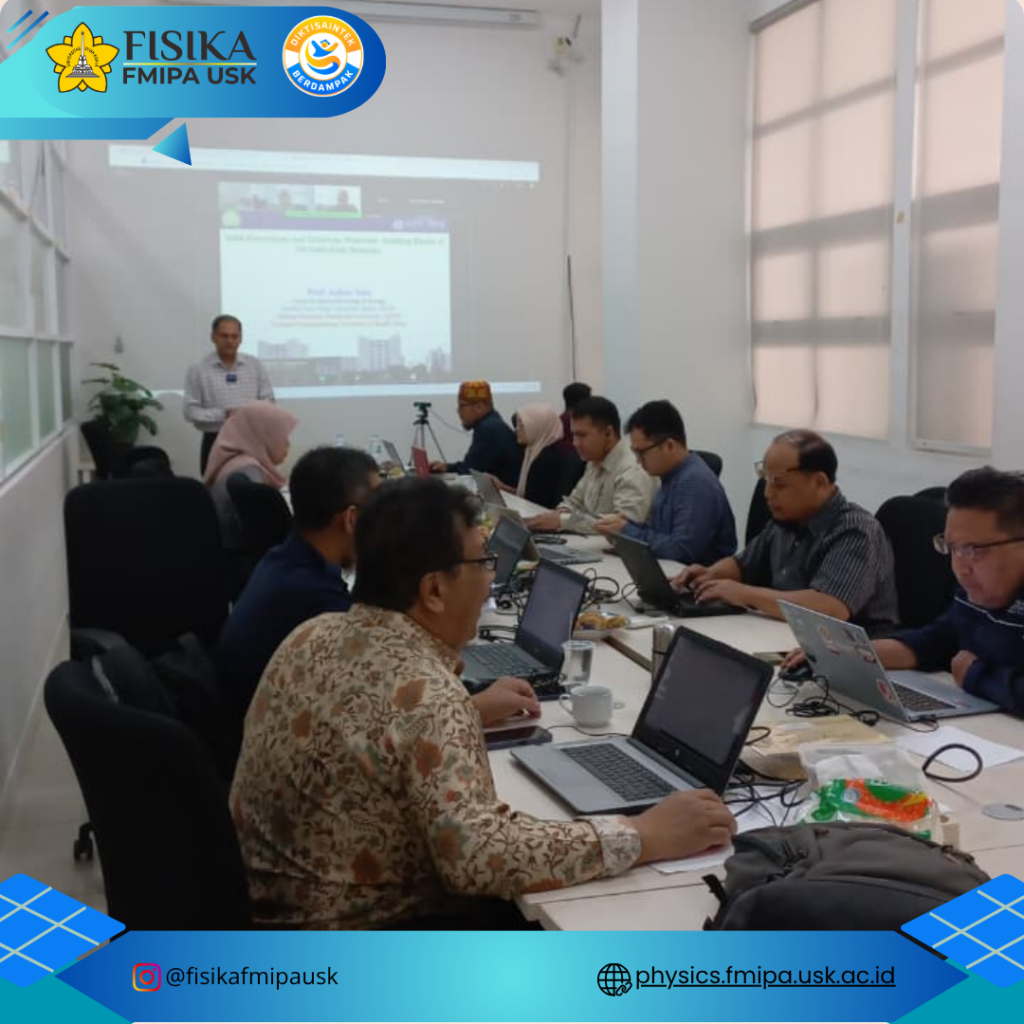
On the second day, Tuesday, 23 June 2026, the Department of Physics organized a Manuscript Development Clinic entitled “Q1 Manuscript and Scientific Writing Enhancement.” The program was designed to strengthen the scientific writing capabilities of lecturers and graduate students, particularly in preparing high-quality manuscripts for publication in internationally indexed Q1 journals. During the session, Prof. Dr. Ankur Jain shared valuable insights into developing competitive research manuscripts, covering research conceptualization, academic writing techniques, manuscript organization, and effective strategies for publishing in high-impact international journals. The session was moderated by Prof. Dr. Ir. Ismail AB, M.Sc.
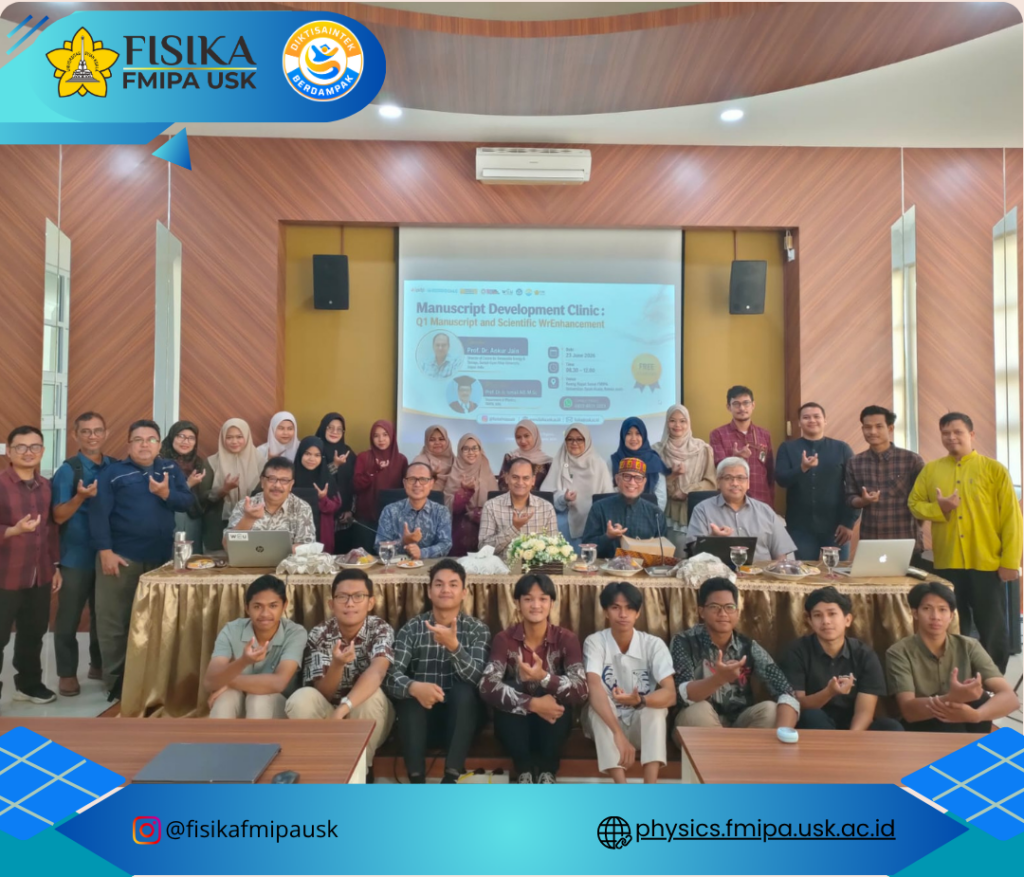
The academic series concluded on Wednesday, 24 June 2026, with a workshop entitled “Materials for All-Solid-State Li-ion Batteries,” held in the Department of Physics Meeting Room and organized in collaboration with the Physics Society of Indonesia (PSI), Aceh Chapter. The workshop highlighted recent developments in materials for all-solid-state lithium-ion batteries, one of the most promising technologies for next-generation energy storage. Participants, such as students, lecturers, and researchers, obtained thorough insights into solid-state battery materials, existing technological challenges, and potential future uses in promoting clean and sustainable energy.
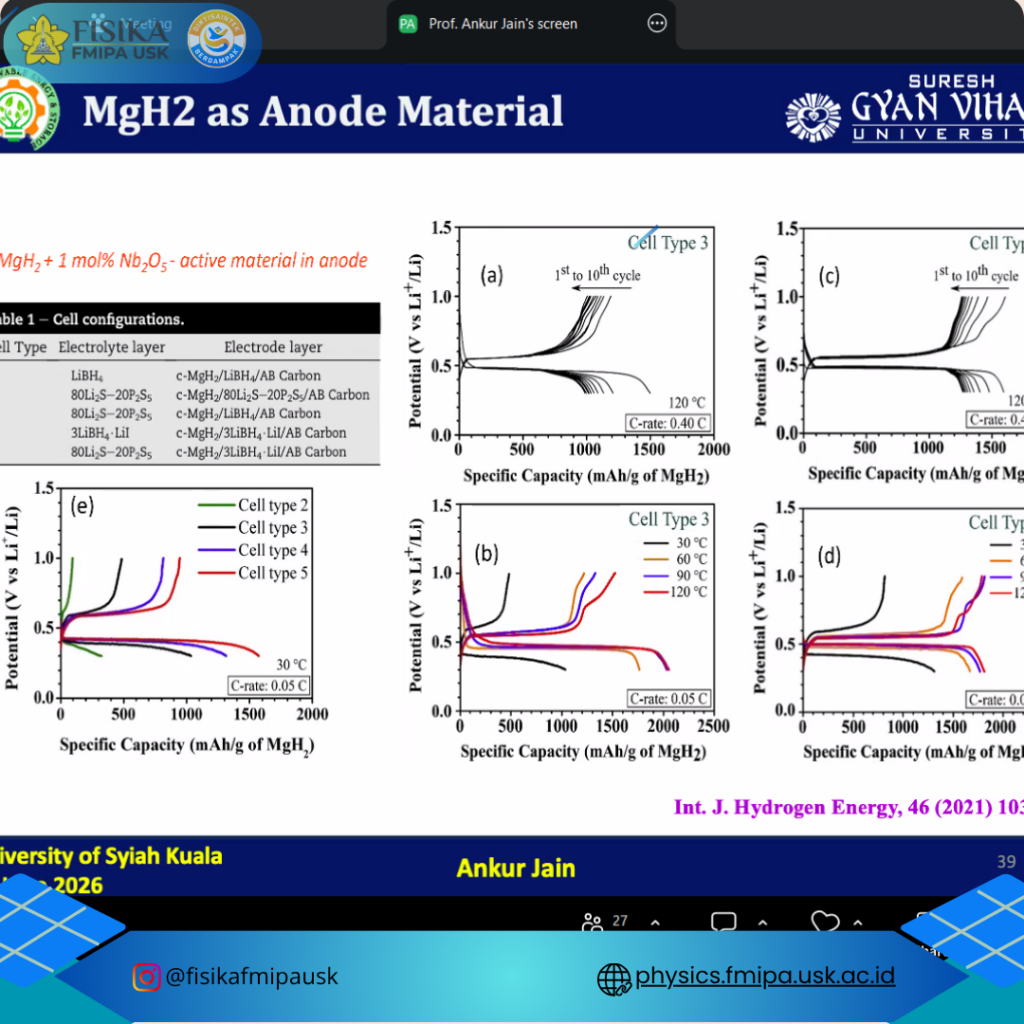
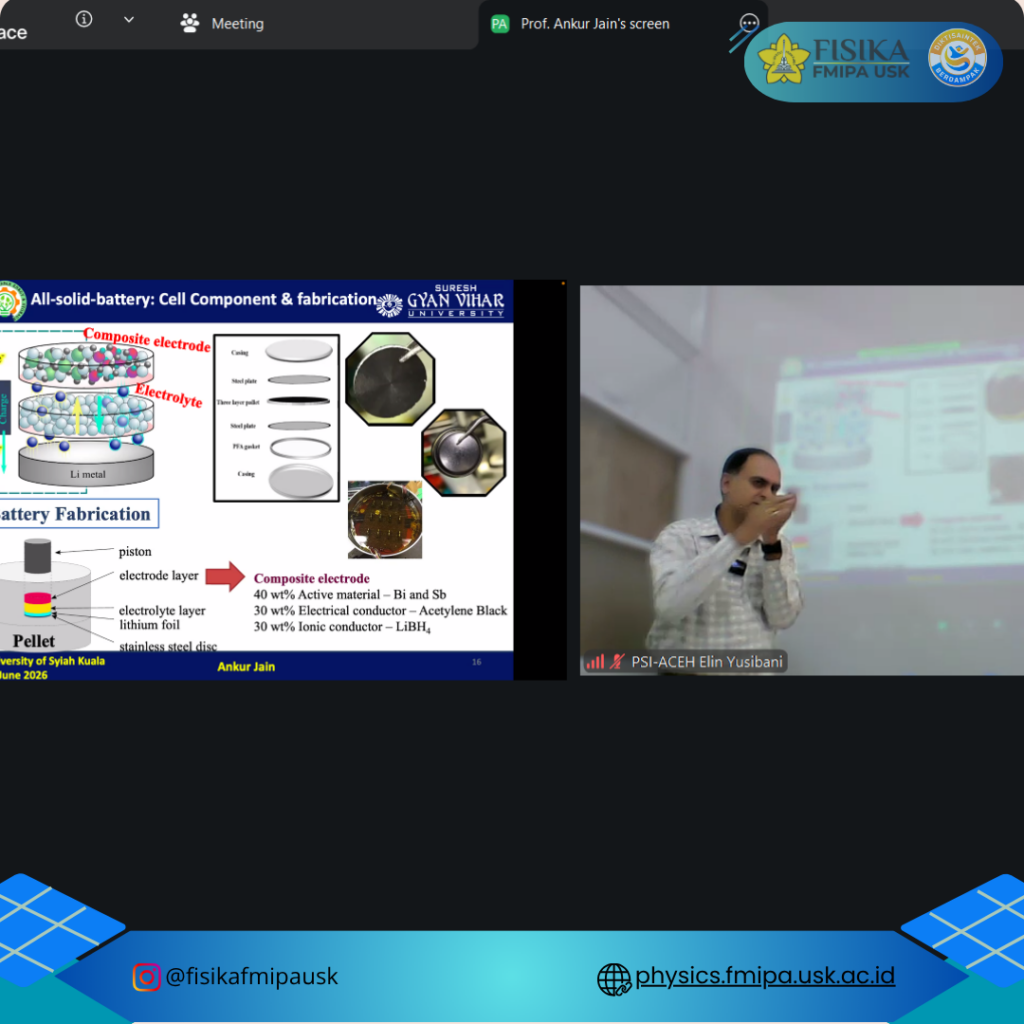
In addition to the academic events, Prof. Dr. Ankur Jain met with the leadership of Universitas Syiah Kuala to discuss opportunities for international collaboration in research, scientific publications, and academic development. The visit also marked the signing of a cooperation agreement between the Department of Physics, FMIPA USK, and the Centre for Renewable Energy & Storage, Suresh Gyan Vihar University, Jaipur, India. This partnership represents a strategic initiative to strengthen international collaboration in the fields of renewable energy and advanced materials research.
The Chair of the Organizing Committee, Dr. Zulkarnain Jalil, S.Si., M.Si., expressed his appreciation for the enthusiastic participation of attendees and the support of all parties involved in the successful implementation of the program.
“Through this program, we hope to establish sustainable academic collaborations while enhancing the research capacity and international publication performance of USK’s academic community, particularly in the fields of renewable energy and advanced materials,” he stated.
As a token of appreciation, all participants received electronic certificates (e-certificates) acknowledging their participation in this international academic program.
The successful implementation of the WCU Inviting Professor Program reflects the Department of Physics FMIPA USK’s continued commitment to strengthening international partnerships, fostering academic excellence, and promoting impactful research that contributes to the advancement of science and sustainable technological innovation.